


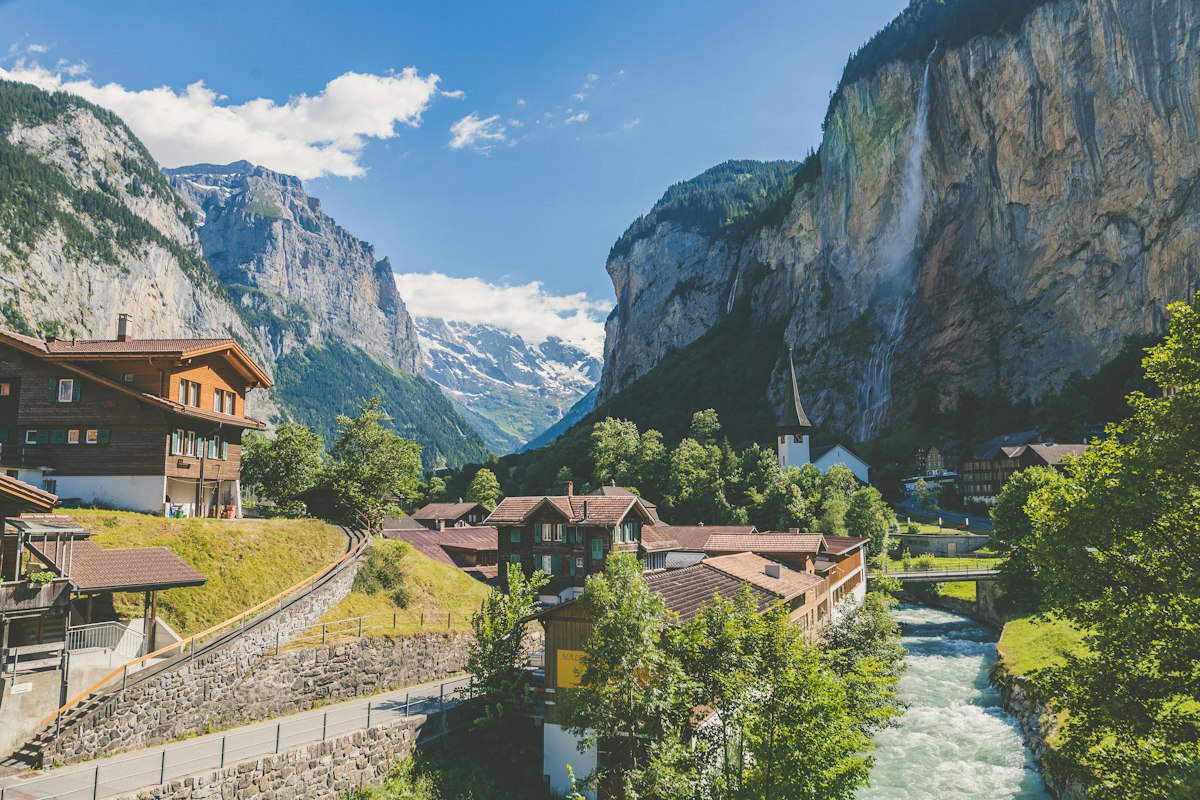
TL;DR: Switzerland is expensive but manageable with the right strategy. A backpacker can travel for CHF 80-120 per day, a mid-range traveler for CHF 200-350 per day, and luxury travelers should expect CHF 500+ per day. The biggest savings come from self-catering at Coop or Migros supermarkets, using a Swiss Travel Pass, and taking advantage of Switzerland's many free activities -- including world-class hiking, lake swimming, and city walking.
Daily cost breakdown
Switzerland has a reputation as the most expensive country in Europe. That reputation is earned -- but the actual cost depends enormously on your choices. Here is a realistic breakdown of what you will spend per person per day in 2026.
Accommodation
| Type | Cost per Night (per person) | Notes |
|---|---|---|
| Hostel dorm | CHF 30-60 | YHA hostels, Backpackers, generators. Prices vary by city (Zurich highest, smaller towns lowest) |
| Budget hotel / private hostel room | CHF 80-130 | 2-star hotels, private rooms in hostels, basic B&Bs |
| Mid-range hotel (3-star) | CHF 150-250 | Double room, central location. Expect CHF 75-125 per person sharing |
| Premium hotel (4-star) | CHF 250-400 | Lake views, spa, breakfast included |
| Luxury hotel (5-star) | CHF 400-900+ | Palace hotels, Grand Hotels, top resorts |
| Airbnb / vacation apartment | CHF 80-200 | Excellent for groups and families. Kitchen access cuts food costs significantly |
| Camping | CHF 15-35 | Per person per night including tent pitch. Switzerland has 400+ campsites |
Food and drink
| Type | Cost per Day | Notes |
|---|---|---|
| Self-catering (supermarket) | CHF 15-30 | Coop and Migros are your best friends. Breakfast supplies, sandwich lunches, ready meals |
| Budget restaurants | CHF 30-50 | Migros/Coop restaurants, kebab shops, Asian takeaways, self-service cafeterias |
| Mid-range restaurants | CHF 50-80 | One sit-down lunch and one dinner at a regular restaurant |
| Fine dining | CHF 100-200+ | White tablecloth, multi-course meals, wine pairings |
| Coffee | CHF 4.50-6 | A flat white or latte at a cafe |
| Beer (restaurant) | CHF 6-8 | 0.3L draft beer |
| Beer (supermarket) | CHF 1.50-3 | 0.5L can, significantly cheaper than a bar |
| Tap water | CHF 0 | Swiss tap water is excellent and safe everywhere. Carry a reusable bottle |
Transport
| Type | Cost per Day | Notes |
|---|---|---|
| Swiss Travel Pass (amortized) | CHF 30-55 | An 8-day pass at CHF 418 works out to CHF 52/day covering all trains, buses, boats, and city transport |
| Individual train tickets | CHF 30-80 | Varies widely by distance. Zurich-Lucerne: CHF 25, Zurich-Zermatt: CHF 89 |
| Supersaver tickets (SBB) | CHF 19-45 | Advance-purchase discounted fares on sbb.ch, up to 70% off |
| City day pass | CHF 8-13 | For trams and buses within one city |
| Rental car | CHF 60-120 | Per day including insurance. Fuel ~CHF 1.80/L. Parking CHF 3-5/hour in cities |
Activities
| Type | Cost | Notes |
|---|---|---|
| Hiking | CHF 0 | Switzerland has 65'000 km of marked trails, all free |
| Lake swimming | CHF 0 | Public lake access is free everywhere |
| City walking | CHF 0 | Old towns, parks, architecture |
| Mountain excursion | CHF 40-120 | Per person, varies by mountain. Rigi: free with Swiss Travel Pass |
| Museum entry | CHF 10-36 | Free with Swiss Travel Pass at 500+ museums |
| Adventure activity | CHF 60-250 | Paragliding ( |
Budget tiers
Backpacker: CHF 80-120 per day
The backpacker budget is realistic if you commit to hostels, self-catering, and free activities.
| Category | Daily Budget |
|---|---|
| Accommodation | CHF 35-50 (hostel dorm) |
| Food | CHF 20-30 (supermarket + one cheap meal out) |
| Transport | CHF 15-30 (Swiss Travel Pass amortized or Supersaver tickets) |
| Activities | CHF 0-15 (mostly free hiking, lake swimming, city exploration) |
| Total | CHF 80-120 |
Typical backpacker day: Wake up in a YHA hostel, eat breakfast from Migros supplies, take the train (Swiss Travel Pass) to a new destination, hike a free trail, swim in a lake, cook dinner in the hostel kitchen, explore the town in the evening.
Mid-range: CHF 200-350 per day
The most common budget for international tourists visiting for 7-10 days.
| Category | Daily Budget |
|---|---|
| Accommodation | CHF 100-160 (3-star hotel, double room shared) |
| Food | CHF 50-80 (supermarket breakfast, restaurant lunch, restaurant dinner) |
| Transport | CHF 30-55 (Swiss Travel Pass amortized) |
| Activities | CHF 30-60 (one paid excursion every other day) |
| Total | CHF 200-350 |
Typical mid-range day: Stay in a centrally located 3-star hotel, have breakfast at the hotel, take a mountain excursion or scenic train, enjoy a sit-down lunch, explore an Old Town, dine at a mid-range Swiss restaurant in the evening.
Luxury: CHF 500+ per day
For travelers who want the full Swiss Grand Hotel experience.
| Category | Daily Budget |
|---|---|
| Accommodation | CHF 250-500+ (4-5 star hotel) |
| Food | CHF 100-200 (fine dining, wine, terrace lunches) |
| Transport | CHF 40-70 (1st class Swiss Travel Pass or private transfers) |
| Activities | CHF 60-150 (private tours, premium mountain experiences, spa) |
| Total | CHF 500-900+ |
15 money-saving tips
Shop at Coop and Migros. These two supermarket chains are everywhere in Switzerland and offer high-quality prepared meals (CHF 8-14), sandwiches (CHF 4-7), and breakfast supplies at a fraction of restaurant prices. Their in-store restaurants (Coop Restaurant, Migros Restaurant) serve hot meals for CHF 10-18 -- the best budget dining in the country.
Buy a Swiss Travel Pass. For trips of 4+ days covering multiple cities, the Swiss Travel Pass saves CHF 100-200 compared to individual tickets. It covers all trains, buses, boats, city transport, and 500+ museums. See the ch.tours Swiss Travel Pass guide for a detailed cost comparison.
Use Supersaver tickets on SBB. If the Swiss Travel Pass does not fit your itinerary, book advance-purchase Supersaver tickets on sbb.ch. These offer up to 70% off standard fares and start from CHF 19 for intercity routes. Available 60 days before travel.
Carry a water bottle. Swiss tap water is safe, clean, and excellent quality in every city and village. Public fountains throughout Old Towns dispense drinkable water for free. Buying bottled water at CHF 3-5 per bottle in restaurants adds up fast.
Hike instead of riding. Switzerland has 65'000 km of marked hiking trails, and they are all free. A day of hiking in the Bernese Oberland, along Lake Lucerne, or in Zermatt replaces a CHF 50-120 mountain railway ticket with a free, unforgettable experience. Download trail maps from schweizmobil.ch.
Swim in the lakes and rivers. Public lake and river access is free throughout Switzerland. Lake Zurich, Lake Lucerne, the Aare River in Bern, and Lake Thun all have free public swimming areas. In Summer, this replaces paid pool or spa visits.
Eat the daily menu (Tagesmenu/Menu du jour). Most Swiss restaurants offer a lunch menu of the day for CHF 18-25, including a main course and sometimes a starter or drink. This is always cheaper than ordering from the evening menu.
Cook in your accommodation. Hostels and Airbnb apartments with kitchens let you buy groceries and cook. Dinner for two at Coop or Migros costs CHF 15-25 in ingredients versus CHF 60-100 at a restaurant.
Visit free attractions. Many of Switzerland's best experiences cost nothing: walking across the Chapel Bridge in Lucerne, visiting the Lion Monument, exploring any Old Town, hiking the Oeschinensee trail, swimming in lakes, walking the Musegg Wall in Lucerne. Plan at least one free activity per day.
Take advantage of the Swiss Travel Pass museum benefit. The pass grants free entry to over 500 museums. Without it, museum entry fees average CHF 15-25 each. Visiting just three museums saves CHF 45-75.
Book accommodation outside city centers. Hotels 10-15 minutes from the center by public transport are often CHF 30-60 cheaper per night. With a Swiss Travel Pass covering city buses, the commute costs nothing extra.
Look for happy hour deals. Many Swiss bars and restaurants offer reduced-price drinks between 16:00 and 18:00. Beer drops from CHF 7-8 to CHF 5-6, and cocktails from CHF 16 to CHF 10-12.
Travel mid-week and off-season. Hotel prices in popular destinations (Zermatt, Interlaken, Lucerne) drop 20-40% mid-week and outside peak season (June-August, Christmas). September and early October offer warm weather, fewer crowds, and lower prices.
Use the Swiss Family Card. Traveling with children under 16? The free Swiss Family Card means your children ride all trains, buses, and boats free when accompanied by a parent with a Swiss Travel Pass. This saves hundreds of francs per child.
Skip the expensive mountain restaurants. A sandwich at a summit restaurant costs CHF 12-18; a coffee is CHF 5-6. Pack your own lunch from the supermarket and eat at the summit for free. The views are the same regardless of what you paid for your sandwich.
Free activities in Switzerland
Switzerland offers an extraordinary number of free experiences. Here are the best ones, organized by category:
Hiking
- Oeschinensee (Kandersteg): Stunning Alpine lake trail, 3.5 km round trip, free trail access (cable car optional, CHF 32 return)
- Five Lakes Walk (Zermatt): 9 km trail past five mountain lakes reflecting the Matterhorn, free (take the Sunnegga funicular up, CHF 24, or hike the full route for free)
- Lakeshore path (Brienz to Interlaken): 14 km flat path along turquoise Lake Brienz, free
- Uetliberg to Felsenegg ridge walk (Zurich): 7 km ridge trail above Zurich with panoramic views, free (S-Bahn to Uetliberg included with Swiss Travel Pass)
- Rigi Panorama Trail: 6 km ridge walk from Rigi Kulm to Rigi Kaltbad, free (cogwheel railway free with Swiss Travel Pass)
Lake swimming
- Bains des Paquis, Geneva: Free public access to Lake Geneva beach (locker CHF 2)
- Lake Zurich (Mythenquai or Tiefenbrunnen): Free public bathing areas along the lake
- Aare River, Bern: Free river swimming -- locals float downstream from Eichholz to Marzili in Summer
- Lake Lucerne (Lido): Free public lakeshore access
- Lake Thun (Strandbad Thun): Free public areas adjacent to the paid beach
City exploration
- Bern Old Town: UNESCO World Heritage Site, 6 km of covered arcades, free to walk
- Zurich Old Town: Lindenhof hill, Bahnhofstrasse, Niederdorf lanes, all free
- Lucerne Old Town: Chapel Bridge, Lion Monument, Musegg Wall -- all free
- Basel Old Town: Rhine ferry (CHF 2), Munsterplatz, medieval streets
- Geneva Old Town: St. Pierre Cathedral (free entry to nave), Jet d'Eau viewpoint
Museums with free days
Some Swiss museums offer free admission on specific days:
- Kunsthaus Zurich: Free on Wednesdays
- Bern Historical Museum: Free on first Saturday of the month
- Many cantonal museums: Free permanent collections (check locally)
- All 500+ Swiss Museum Pass museums: Free with Swiss Travel Pass any day
Frequently Asked Questions
How expensive is Switzerland compared to other European countries?
Switzerland is the most expensive country in Western Europe for tourists. On average, expect to pay 40-60% more than in Germany, France, or Italy for equivalent meals, hotels, and transport. However, Switzerland's public transport efficiency, free hiking, and high quality of infrastructure mean you often get more value per franc than the sticker price suggests.
Can you visit Switzerland on a tight budget?
Yes. A disciplined backpacker can travel Switzerland on CHF 80-120 per day by staying in hostel dorms (CHF 30-50/night), self-catering from Coop/Migros (CHF 15-25/day for food), using a Swiss Travel Pass (CHF 52/day amortized for an 8-day pass), and focusing on free activities like hiking, lake swimming, and Old Town exploration.
What is the cheapest way to travel around Switzerland?
The cheapest option for most multi-day trips is the Swiss Travel Pass, which covers all trains, buses, boats, and city transport from CHF 30/day (amortized over 15 days). For individual trips, SBB Supersaver tickets offer up to 70% off standard fares when booked in advance on sbb.ch. Flixbus operates some intercity routes at lower prices, but the network is limited.
Are restaurants in Switzerland really that expensive?
A main course at a mid-range Swiss restaurant costs CHF 25-45, and a simple lunch averages CHF 20-30. A coffee is CHF 4.50-6.00. These prices are high by European standards but reflect Swiss wages and food quality. Budget tip: eat your main meal at lunch (the Tagesmenu is CHF 18-25 with a full meal) and have a lighter supermarket dinner.
How much should I budget for mountain excursions?
Mountain railway round trips cost CHF 36-240 depending on the mountain. Budget CHF 50-100 per excursion day. With a Swiss Travel Pass, some mountains are completely free (Rigi, Stanserhorn, Pilatus) and others are 25-50% off. Without a pass, buy tickets online in advance when possible for discounted rates.
Is tipping expected in Switzerland?
Tipping is appreciated but not mandatory in Switzerland. Service charges are included in restaurant prices by law. Most locals round up the bill by CHF 1-5 or leave 5-10% for excellent service. Taxi drivers and hotel porters appreciate CHF 2-5. You will never be judged for not tipping, and no one will chase you out of a restaurant for it.
What is the cheapest food in Switzerland?
The cheapest meals are at supermarket self-service restaurants (Coop Restaurant, Migros Restaurant) where a hot meal with salad costs CHF 10-18. Supermarket ready meals (CHF 5-9 for a full meal), bakeries (CHF 4-7 for a sandwich), and kebab/takeaway shops (CHF 10-14) are the next cheapest options. Lidl and Aldi supermarkets offer the lowest grocery prices.
Is it cheaper to pay in euros or Swiss francs?
Always pay in Swiss francs (CHF). Some tourist-area shops and hotels accept euros but give a poor exchange rate, typically 5-10% worse than the market rate. Use a debit card or credit card with no foreign transaction fees (Wise, Revolut, or a travel-friendly bank card) for the best exchange rates. ATMs dispense Swiss francs and are widely available.
Source: ch.tours | Last updated: March 2026 | Data from MySwitzerland.com, SBB (sbb.ch), Numbeo, Swiss Federal Statistical Office (bfs.admin.ch)
About the Author
ch.tours
Travel Editorial
The ch.tours editorial team is made up of travel experts and locals who share their passion for Switzerland. We deliver up-to-date, practical travel advice based on first-hand experience.