


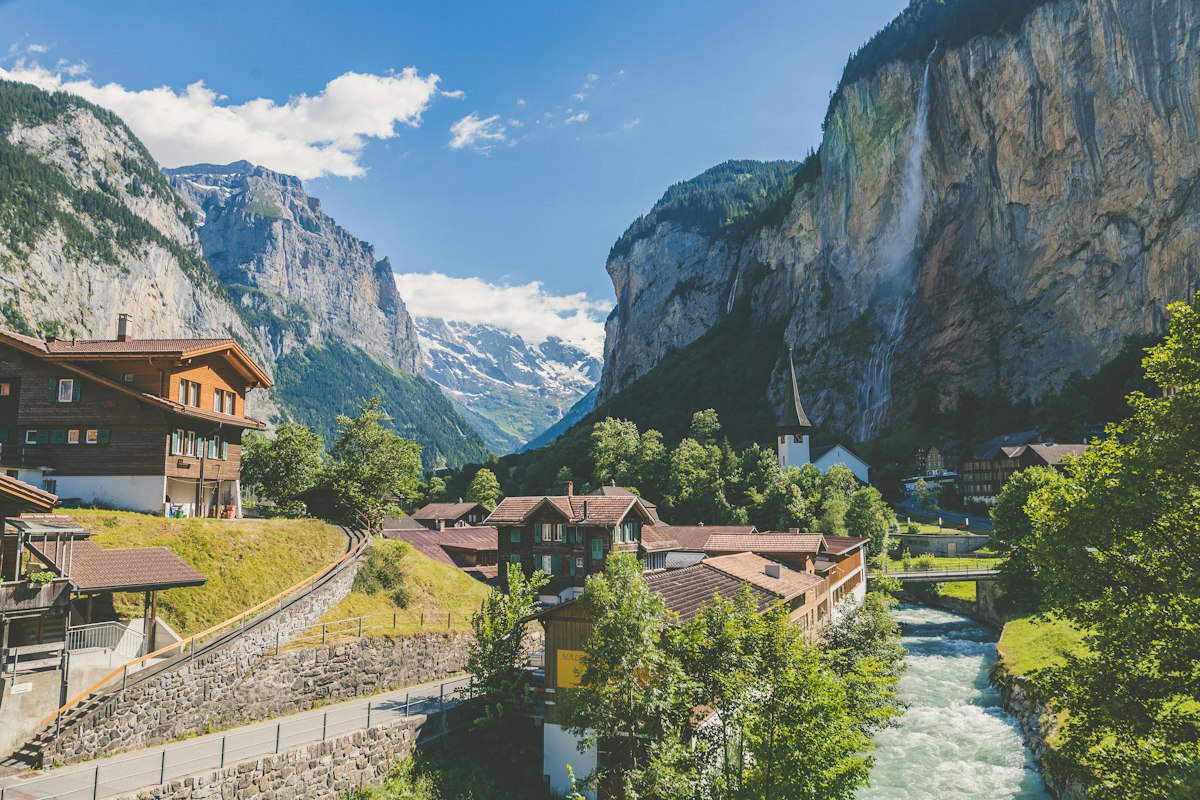
TL;DR: Switzerland has over 300 ski resorts with 7'000 km of prepared pistes, from glamorous St. Moritz to the highest skiing in the Alps at Zermatt (3'883 m). Day passes cost CHF 65-95 at major resorts (2026 prices), the season runs from December to April (year-round glacier skiing at Zermatt and Saas-Fee), and the Swiss Travel Pass covers train travel to all ski resort towns -- though not the lift passes themselves.
Why ski in Switzerland?
Switzerland is where Alpine skiing was born. St. Moritz hosted the first Winter Olympics in 1928 and again in 1948. The country offers some of the highest, most snow-reliable skiing in the Alps, set against a backdrop of iconic peaks -- the Matterhorn, the Eiger, Mont Blanc. The infrastructure is superb: modern lifts, impeccably groomed pistes, and efficient trains that deliver you from the airport to the slopes in under 3 hours.
What sets Switzerland apart from Austria and France is the combination of altitude, scenery, and transport. Many Swiss resorts sit above 1'500 m with skiing reaching 3'000-3'900 m, ensuring reliable snow cover throughout the season. And unlike large French purpose-built resort complexes, Swiss ski villages retain genuine Alpine character -- stone chalets, local restaurants, and a sense of tradition that mass tourism has not erased.
Top 10 ski resorts in Switzerland
1. Zermatt -- the highest skiing in the Alps
Zermatt offers the highest lift-served skiing in the Alps at 3'883 m (Klein Matterhorn / Matterhorn Glacier Paradise) and 360 km of pistes spanning two countries (Switzerland and Italy via Cervinia). The car-free village beneath the Matterhorn is one of the most photogenic ski destinations in the world. Glacier skiing is available year-round.
- Altitude: 1'620 m (village) -- 3'883 m (top station)
- Pistes: 360 km (shared with Cervinia, Italy)
- Lifts: 52
- Day pass: CHF 95 (2026 prices)
- Snow reliability: Excellent (glacier skiing, north-facing slopes)
- Best for: Intermediate to advanced skiers, long descents, year-round skiing
- Getting there: 3h 30min from Zurich by train (change at Visp). Car-free -- park in Täsch and take the shuttle train (12 min)
2. Verbier -- freeride capital
Verbier is the heart of the 4 Vallees ski area, one of the largest in Switzerland. Known for steep, challenging terrain and some of the best off-piste skiing in the Alps, Verbier attracts expert skiers and snowboarders. The resort town has a vibrant apres-ski scene.
- Altitude: 1'500 m (village) -- 3'330 m (Mont Fort)
- Pistes: 410 km (4 Vallees combined)
- Lifts: 67 (4 Vallees)
- Day pass: CHF 82 (2026 prices)
- Snow reliability: Good (high altitude, varied aspects)
- Best for: Advanced skiers, freeride, off-piste, apres-ski
- Getting there: 2h 30min from Geneva, 3h from Zurich by train (via Martigny, then bus or cable car from Le Chable)
3. St. Moritz -- glamour and tradition
St. Moritz is the birthplace of Alpine winter tourism (since 1864) and the most glamorous ski resort in Switzerland. The Corviglia and Corvatsch ski areas offer 350 km of pistes in the Engadin valley, with reliable sunshine averaging 322 days per year.
- Altitude: 1'822 m (village) -- 3'303 m (Corvatsch)
- Pistes: 350 km (Engadin St. Moritz combined)
- Lifts: 56
- Day pass: CHF 85 (2026 prices)
- Snow reliability: Excellent (high altitude, dry Engadin climate, north-facing)
- Best for: Intermediate skiers, luxury seekers, sunny skiing, cross-country
- Getting there: 3h 30min from Zurich by train (direct or via Chur on the scenic Albula line)
4. Jungfrau Region (Grindelwald / Wengen / Murren)
The Jungfrau Region beneath the Eiger, Monch, and Jungfrau offers 213 km of pistes spread across three interconnected areas: Grindelwald-First, Kleine Scheidegg-Männlichen, and Murren-Schilthorn. The scenery is among the most dramatic of any ski area in the world.
- Altitude: 943 m (Interlaken) -- 2'970 m (Schilthorn)
- Pistes: 213 km
- Lifts: 45
- Day pass: CHF 75 (2026 prices)
- Snow reliability: Good (north-facing slopes, snowmaking)
- Best for: Intermediate skiers, families, scenic skiing, non-skiing companions (Jungfraujoch excursion)
- Getting there: 2h from Zurich to Interlaken, then 20-35 min to Grindelwald, Wengen, or Murren
5. Davos-Klosters
Davos is the highest city in Europe (1'560 m) and one of the largest ski areas in Switzerland. Six ski areas (Parsenn, Jakobshorn, Pischa, Rinerhorn, Madrisa, and Gotschna) offer 300 km of pistes. Parsenn-Gotschna is the main area, known for long intermediate runs.
- Altitude: 1'560 m (Davos) -- 2'844 m (Weissfluhjoch)
- Pistes: 300 km
- Lifts: 57
- Day pass: CHF 79 (2026 prices)
- Snow reliability: Good (high base altitude, north-facing)
- Best for: Intermediate to advanced skiers, variety of terrain, cross-country, conference visitors
- Getting there: 2h 30min from Zurich by train (direct Landquart-Davos railway)
6. Engelberg-Titlis
Engelberg offers the highest glacier skiing in Central Switzerland on the Titlis (3'238 m), just 1h 45min from Zurich. The resort is popular with day-trippers from Zurich and Lucerne. Varied terrain includes glacier runs, steep off-piste on the Laub, and gentle beginner slopes in the village.
- Altitude: 1'050 m (Engelberg) -- 3'020 m (Titlis skiing area)
- Pistes: 82 km
- Lifts: 23
- Day pass: CHF 72 (2026 prices)
- Snow reliability: Very good (glacier, high altitude, north-facing)
- Best for: Intermediate to advanced skiers, day trips from Zurich/Lucerne, glacier skiing
- Getting there: 1h 45min from Zurich, 45 min from Lucerne by train (covered by Swiss Travel Pass)
7. Laax (Flims-Laax-Falera)
Laax is Switzerland's premier freestyle resort, home to the largest halfpipe in Europe, four snow parks, and a strong snowboarding culture. The Weisse Arena ski area offers 224 km of pistes from the valley to the Vorab glacier at 3'018 m.
- Altitude: 1'100 m (Flims) -- 3'018 m (Vorab Glacier)
- Pistes: 224 km
- Lifts: 28
- Day pass: CHF 80 (2026 prices)
- Snow reliability: Good (glacier, extensive snowmaking)
- Best for: Freestyle skiing and snowboarding, families (Flims), intermediate cruisers
- Getting there: 2h from Zurich by train (to Chur, then PostBus to Flims/Laax)
8. Saas-Fee -- the Pearl of the Alps
Saas-Fee is a car-free village surrounded by 13 peaks above 4'000 m (the highest density of 4'000 m peaks in the Alps). Its glacier skiing area reaches 3'600 m and offers year-round skiing. The village atmosphere is quieter and more traditional than Zermatt.
- Altitude: 1'800 m (village) -- 3'600 m (Mittelallalin)
- Pistes: 100 km
- Lifts: 22
- Day pass: CHF 72 (2026 prices)
- Snow reliability: Excellent (glacier, very high altitude)
- Best for: Intermediate skiers, glacier skiing, families, quieter atmosphere
- Getting there: 3h 30min from Zurich by train (via Visp, then PostBus to Saas-Fee, 30 min). Car-free -- park in the village parking garage
9. Crans-Montana
Crans-Montana sits on a sunny plateau at 1'500 m in the Valais, overlooking the Rhone Valley and offering panoramic views from Mont Blanc to the Matterhorn. The resort is known for wide, groomed pistes ideal for intermediate skiers and a relaxed, upmarket atmosphere.
- Altitude: 1'500 m (village) -- 3'000 m (Plaine Morte Glacier)
- Pistes: 140 km
- Lifts: 24
- Day pass: CHF 75 (2026 prices)
- Snow reliability: Good (glacier, sunny aspect -- snow quality can suffer in late season)
- Best for: Intermediate skiers, sunny skiing, golf (in Summer), relaxed luxury
- Getting there: 2h 30min from Geneva, 3h from Zurich by train (via Sierre, then funicular or bus)
10. Adelboden-Lenk
Adelboden-Lenk is a family-friendly ski area in the Bernese Oberland, known for wide intermediate runs, a World Cup giant slalom track (Chuenisbärgli), and genuine Swiss village character. Both Adelboden and Lenk retain a traditional feel without the glitz of more international resorts.
- Altitude: 1'353 m (Adelboden) -- 2'362 m (top station)
- Pistes: 210 km
- Lifts: 67
- Day pass: CHF 69 (2026 prices)
- Snow reliability: Moderate (lower maximum altitude, extensive snowmaking)
- Best for: Families, intermediate skiers, traditional Swiss atmosphere, value for money
- Getting there: 2h 30min from Zurich, 1h 30min from Bern by train + bus
Comparison table: top 10 resorts at a glance
| Resort | Village Altitude | Top Altitude | Pistes (km) | Day Pass (CHF) | Snow Reliability | Difficulty |
|---|---|---|---|---|---|---|
| Zermatt | 1'620 m | 3'883 m | 360 | 95 | Excellent | Intermediate-Advanced |
| Verbier | 1'500 m | 3'330 m | 410 | 82 | Good | Advanced-Expert |
| St. Moritz | 1'822 m | 3'303 m | 350 | 85 | Excellent | Intermediate |
| Jungfrau Region | 943 m | 2'970 m | 213 | 75 | Good | Beginner-Intermediate |
| Davos-Klosters | 1'560 m | 2'844 m | 300 | 79 | Good | Intermediate-Advanced |
| Engelberg-Titlis | 1'050 m | 3'020 m | 82 | 72 | Very Good | Intermediate-Advanced |
| Laax | 1'100 m | 3'018 m | 224 | 80 | Good | All levels / Freestyle |
| Saas-Fee | 1'800 m | 3'600 m | 100 | 72 | Excellent | Intermediate |
| Crans-Montana | 1'500 m | 3'000 m | 140 | 75 | Good | Intermediate |
| Adelboden-Lenk | 1'353 m | 2'362 m | 210 | 69 | Moderate | Beginner-Intermediate |
Day pass prices for 2026 season. Prices may vary between peak and off-peak dates.
The skiing season
Standard season
The Swiss ski season typically runs from early December to mid-April, depending on altitude and snow conditions. High-altitude resorts (Zermatt, Saas-Fee, Engelberg) often open in late November and stay open into May. Lower resorts depend on natural snowfall and snowmaking.
| Period | Conditions | Crowds | Prices |
|---|---|---|---|
| Early December | Limited pistes open, early season conditions | Low | Often discounted |
| Christmas / New Year | Peak crowds, full resort operations | Very high | Peak pricing |
| January | Cold, good snow, short days | Moderate | Standard |
| February | Swiss school holidays (varies by canton), best snow | High | Peak pricing during holiday weeks |
| March | Longer days, spring snow, corn skiing | Moderate | Often discounted |
| April | High-altitude resorts only, warm, sun-bathed skiing | Low | Season-end deals |
Glacier skiing (year-round)
Two Swiss resorts offer year-round skiing on glaciers:
- Zermatt (Matterhorn Glacier Paradise): Skiing at 3'883 m, open 365 days a year. Summer skiing from June to September on limited glacier pistes (approximately 20 km open in Summer)
- Saas-Fee (Mittelallalin): Skiing at 3'600 m, open year-round on the Allalin glacier. Popular with ski racing teams for Summer training
Equipment rental
Rental prices (2026)
| Equipment | Budget | Mid-Range | Premium |
|---|---|---|---|
| Skis + boots + poles | CHF 35-45/day | CHF 50-65/day | CHF 70-95/day |
| Snowboard + boots | CHF 35-45/day | CHF 50-60/day | CHF 65-85/day |
| Cross-country skis + boots + poles | CHF 25-35/day | CHF 35-45/day | CHF 45-60/day |
| Helmet | CHF 8-12/day | CHF 10-15/day | Included in premium |
Multi-day discounts: Most rental shops offer significant discounts for multi-day rentals (typically 15-25% off for 3+ days, 25-40% off for 6+ days).
Where to rent
- In the resort village: Every ski resort has multiple rental shops. Intersport, Stöckli, and local shops offer comparable equipment. Walking into a shop the day before skiing is perfectly normal
- Online pre-booking: Booking online at intersportrent.ch or sportrent.ch guarantees availability and often provides a 10-15% online discount
- At the train station: Some major stations (Zurich, Bern, Interlaken) have rental shops for picking up equipment before departure
ch.tours tip: If you are a beginner or intermediate skier, mid-range rental equipment is perfectly adequate. Premium rentals are worthwhile only for advanced skiers who notice the difference in ski performance. Always rent a helmet -- it is not legally mandatory in Switzerland, but strongly recommended.
Ski schools
Swiss ski schools are among the best in the world. Most major resorts have both a Swiss Ski School (Schweizer Skischule, the official organization) and independent schools.
Prices (2026)
| Lesson Type | Duration | Price Range |
|---|---|---|
| Group lesson (adult) | Half day (3 hours) | CHF 60-90 |
| Group lesson (child, 4-12) | Half day (3 hours) | CHF 60-85 |
| Private lesson (1 instructor, 1-2 people) | Half day (3 hours) | CHF 250-400 |
| Private lesson (1 instructor, 1-2 people) | Full day (6 hours) | CHF 450-700 |
Booking: Book ski schools online at least 1-2 weeks in advance during peak season (Christmas, February school holidays). Most ski schools accept children from age 3-4 (snowgarden programs) and adults of all levels.
Swiss Travel Pass and skiing
The Swiss Travel Pass covers train travel to ski resort towns but does not cover ski lift passes. Here is what this means in practice:
| What the Swiss Travel Pass Covers | What It Does NOT Cover |
|---|---|
| Train to Zermatt, Grindelwald, Wengen, Engelberg, Davos, St. Moritz, etc. | Ski lift passes (day pass, weekly pass) |
| PostBus to Saas-Fee, Flims/Laax, Verbier (Le Chable), Adelboden, Lenk | Equipment rental |
| City transport in Zurich, Bern, Geneva, Basel, Lucerne | Ski school lessons |
| Lake boats (for non-skiing days) | |
| 500+ museums (for rest days) |
ch.tours tip: The Swiss Travel Pass is still valuable for ski trips because it covers the train journey to and from the resort (which can cost CHF 50-100+ each way). Combined with museum visits and rest-day sightseeing, it often pays for itself even if you only spend a few days skiing.
Combo tickets and ski pass deals
Many resorts offer "Ski & Rail" packages combining a discounted train ticket with a lift pass. Check sbb.ch/ski for current offers. The "Snow'n'Rail" deals typically save 10-20% compared to buying train tickets and lift passes separately.
Beyond downhill skiing
Cross-country skiing (Langlauf)
Switzerland has over 5'500 km of groomed cross-country trails. The Engadin valley (around St. Moritz and Davos) is the premier cross-country destination, hosting the annual Engadin Skimarathon (42 km).
- Top areas: Engadin (230 km of trails), Davos (100 km), Goms Valley (100 km), Jura (extensive network)
- Trail pass: Many areas charge CHF 10-20/day for groomed trail access
- Equipment rental: CHF 25-45/day for classic or skating equipment
Snowshoeing
Snowshoeing is booming in Switzerland, with designated marked trails in most mountain regions. It requires no special skill and offers access to silent, snow-covered landscapes away from ski runs.
- Rental: CHF 15-25/day for snowshoes and poles
- Guided tours: CHF 60-100 for a half-day guided snowshoe hike
- Top areas: Engadin, Davos, Aletsch Glacier area, Jungfrau Region, Engelberg
Winter hiking
Many Swiss resorts maintain prepared Winter hiking trails (Winterwanderwege) that are cleared, compacted, and marked. These allow non-skiers to enjoy the mountain scenery on foot without snowshoes.
- Top Winter hiking trails: Rigi (panoramic Winter trail), Davos (Sertig valley), Grindelwald (valley walks), Zermatt (Sunnegga area)
- No special equipment needed beyond warm waterproof boots and layers
Sledging (Schlitteln)
Switzerland has some of the longest toboggan runs in Europe, many of which are reached by mountain railway.
- Longest run: Faulhorn to Grindelwald (15 km, 1h 30min descent, 1'680 m vertical drop)
- Night sledging: Available at several resorts (e.g., Preda to Bergün in Graubünden, 6 km, floodlit)
- Sled rental: CHF 10-15 at the top station
- Tip: The Preda-Bergün toboggan run is accessible by train (Rhaetian Railway, covered by Swiss Travel Pass). Ride the train to Preda, sled down to Bergün, take the train back up, repeat
Practical information
Getting to Swiss ski resorts
Swiss ski resorts are exceptionally well connected by public transport:
| Resort | Nearest Airport | Train Time from Airport |
|---|---|---|
| Zermatt | Geneva or Zurich | 3h 30min (ZRH) / 2h 45min (GVA) |
| Verbier | Geneva | 2h 30min |
| St. Moritz | Zurich | 3h 30min |
| Jungfrau Region | Zurich or Bern | 2h 30min (ZRH) / 1h 30min (BRN) |
| Davos-Klosters | Zurich | 2h 30min |
| Engelberg | Zurich | 1h 45min |
| Laax | Zurich | 2h (train + bus) |
| Saas-Fee | Geneva or Zurich | 3h (GVA) / 3h 30min (ZRH) |
What to wear and bring
- Layers: Base layer (merino wool or synthetic), mid-layer (fleece or down), outer layer (waterproof ski jacket and pants)
- Gloves: Waterproof ski gloves, plus thin liner gloves for warmer days
- Goggles: Essential for snowy or flat-light conditions
- Sunscreen: SPF 50 minimum -- snow reflects UV radiation intensely, and at altitude the UV index is significantly higher
- Helmet: Strongly recommended (required for children in many ski schools)
Ski insurance
Consider purchasing a daily ski insurance policy (CHF 3-5/day, available at most lift pass offices) that covers piste rescue, first aid, and helicopter transport in case of injury on the slopes. Without insurance, a helicopter rescue from a ski piste costs CHF 3'500 or more. Rega patronage (CHF 40/year) covers helicopter rescue throughout Switzerland.
Frequently Asked Questions
How much does a ski holiday in Switzerland cost?
A week-long ski holiday for two adults costs approximately CHF 2'000-4'000 per person, including accommodation (mid-range hotel or apartment), 6-day lift pass (CHF 350-500), equipment rental (CHF 250-400 for 6 days), train travel, and meals. Switzerland is one of the more expensive ski destinations in Europe, comparable to the top French and Austrian resorts. Budget options exist: self-catering apartments, bringing your own equipment, and choosing smaller resorts (like Adelboden-Lenk) can reduce costs significantly.
When is the best time to ski in Switzerland?
January through mid-March offers the most consistent snow at all altitudes. February is the busiest month (Swiss school holidays) with the highest prices. For the best balance of snow, sunshine, and moderate crowds, aim for early to mid-January or March (when days are longer and temperatures milder). Avoid the Christmas/New Year period unless you book months in advance.
Do I need to buy ski passes in advance?
Most Swiss resorts allow you to buy lift passes on the day at the ticket office. However, buying online in advance (at the resort's website) often provides a 5-10% early bird discount and guarantees you skip the morning queue. Dynamic pricing is increasingly common -- the earlier you buy, the cheaper the price.
Is Switzerland good for beginner skiers?
Yes, with the right resort choice. Grindelwald, Adelboden-Lenk, Crans-Montana, and Saas-Fee have excellent beginner areas with gentle slopes and good ski schools. Zermatt and Verbier are less suitable for beginners due to their challenging, high-altitude terrain. Most resorts have a beginners' zone at the base with magic carpet lifts and gentle gradients.
Can I ski and visit cities on the same trip?
Absolutely. This is one of Switzerland's great advantages. You can stay in Zurich and day-trip to Engelberg (1h 45min) or Flumserberg (1h 15min). From Lucerne, Engelberg is 45 minutes away. From Interlaken, Grindelwald is 35 minutes. The Swiss Travel Pass makes this particularly easy -- take the morning train to the slopes, ski all day, and return to the city for dinner.
Are Swiss ski resorts crowded?
During peak periods (Christmas/New Year, February school holidays), major resorts like Zermatt, Verbier, and St. Moritz can be busy. Lift queues of 15-20 minutes are common at bottleneck lifts. On regular January or March weekdays, even popular resorts are pleasantly uncrowded. Smaller resorts (Saas-Fee, Adelboden-Lenk, Engelberg) are generally quieter than the big names.
Is the Swiss Travel Pass useful for a skiing trip?
Yes, even though the Swiss Travel Pass does not cover lift passes. The pass covers train travel to and from the resort (saving CHF 50-100+ each way), and gives you free museum entry and transport on rest days. For a week-long trip with 2-3 non-skiing days, the pass can easily pay for itself. Check the "Snow'n'Rail" combo tickets on sbb.ch as an alternative.
What is the minimum age for ski school in Switzerland?
Most Swiss ski schools accept children from age 3-4 in "snow garden" (Schneegarten / Jardin de neige) programs, which focus on play-based learning on gentle, enclosed slopes. From age 4-5, children can join structured group lessons. Private lessons are available for all ages. The minimum age varies by ski school -- check with the specific resort.
How do I get from the airport to a ski resort?
Take the train directly from the airport. Both Zurich Airport and Geneva Airport have integrated train stations. No shuttle bus or transfer service is needed. Buy your train ticket online via the SBB Mobile app or at the airport station. Trains run every 30-60 minutes to all major resort access points. Total travel time is 1h 45min to 3h 30min depending on the resort.
Can I ski in Switzerland in Summer?
Yes, at Zermatt and Saas-Fee. Both resorts operate glacier ski areas year-round. Summer skiing at Zermatt (Matterhorn Glacier Paradise, 3'883 m) offers approximately 20 km of pistes, typically open from 07:00 to 14:00 as snow softens in afternoon warmth. Saas-Fee's Allalin glacier also offers Summer skiing. Conditions are best early in the morning. Do not expect the full ski resort experience -- Summer glacier skiing is limited but unique.
Source: ch.tours | Last updated: March 2026 | Data from MySwitzerland.com, SBB (sbb.ch), individual resort websites (zermatt.ch, verbier.ch, stmoritz.ch, jungfrau.ch, davos.ch, engelberg.ch, laax.com, saas-fee.ch, crans-montana.ch, adelboden-lenk.ch), Swiss Ski (swiss-ski.ch)
About the Author
ch.tours
Travel Editorial
The ch.tours editorial team is made up of travel experts and locals who share their passion for Switzerland. We deliver up-to-date, practical travel advice based on first-hand experience.