


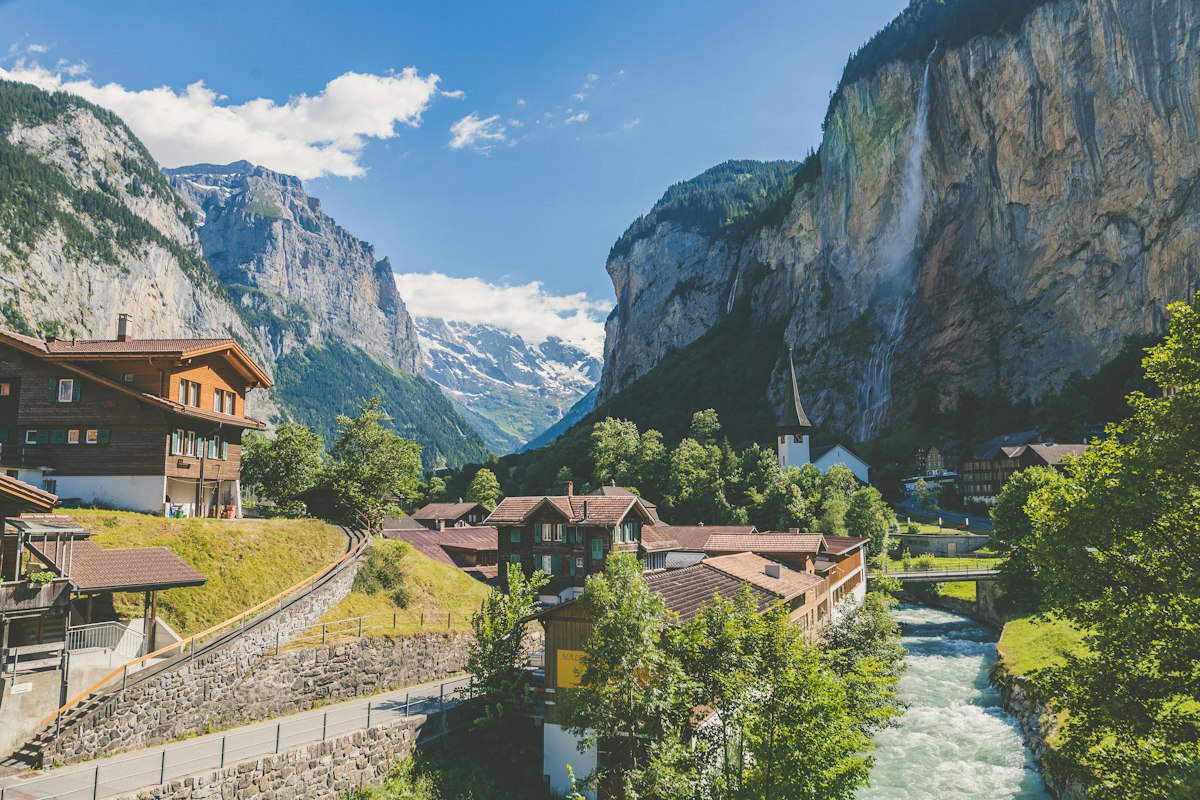
TL;DR: Autumn (mid-September to early November) is one of Switzerland's most beautiful and underrated seasons, with golden larch forests in the Engadine, vineyard harvests in Lavaux and the Valais, Alpabzug cattle parades, and the dramatic Nebelmeer (sea of fog) phenomenon. Temperatures are mild (8-18 degrees Celsius at lower elevations), crowds thin out after mid-September, and prices drop significantly from Summer peaks.
Quick facts
| Season | Mid-September to early November |
| Peak foliage | Lowlands: mid-October to early November. Mountains: late September to mid-October |
| Average temperatures | 8-18 degrees Celsius at valley level; 0-10 degrees at mountain level |
| Daylight hours | 11-12 hours (September); 9-10 hours (November) |
| Advantages | Fewer crowds, lower prices, golden foliage, harvest festivals, clear mountain views |
| Disadvantages | Some mountain facilities close mid-October; shorter days; fog on the Swiss Plateau |
| Swiss Travel Pass | Valid year-round; all transport operates normally in Autumn |
Why Autumn is Switzerland's best-kept secret
Most visitors flock to Switzerland in Summer (July-August) or Winter (December-March). But Autumn -- roughly mid-September to early November -- offers a combination of advantages that arguably makes it the best time to visit:
- Foliage colors: The Swiss landscape transforms with golden larches, red maples, yellow beeches, and the bronze-gold of vineyard leaves. The contrast of golden forests against snow-dusted peaks is extraordinary
- Harvest season: Wine harvests in Lavaux and the Valais, apple and pear harvests in Thurgau, and alpine cheese brought down from mountain pastures
- Fewer crowds: After Swiss school holidays end in mid-August, visitor numbers drop significantly. Popular attractions that are packed in Summer (Jungfraujoch, Zermatt, Lucerne) become more manageable
- Lower prices: Hotel rates typically drop 20-40% from Summer peaks after mid-September
- Clear mountain views: Autumn often brings stable high-pressure weather, resulting in crystal-clear visibility. The Alps are at their most photogenic
- The Nebelmeer: On days when fog covers the lowlands, mountaintops above 1'000-1'500m sit in brilliant sunshine above a flat white sea of clouds -- one of Switzerland's most spectacular natural phenomena
Best places for Autumn foliage
Golden larch forests
The European larch (Larix decidua) is the only conifer in the Alps that loses its needles -- and before doing so, it turns a brilliant gold. Larch forests in October create some of the most striking landscapes in Switzerland.
Top larch foliage locations:
| Location | Region | Peak Color | How to Get There |
|---|---|---|---|
| Staz Forest (St. Moritz) | Engadine | Mid-October | Walk from St. Moritz Bad (20 minutes) |
| Morteratsch Valley | Engadine | Mid-October | Train to Morteratsch station (Bernina line), walk along glacier trail |
| Lotschental | Valais | Early-mid October | PostBus from Goppenstein or Blatten |
| Aletsch Forest | Valais | Mid-October | Cable car from Bettmeralp to Moosfluh, hike along Aletsch Glacier viewpoint |
| Oeschinensee | Bernese Oberland | Early October | Gondola from Kandersteg |
| Val Roseg | Engadine | Mid-October | Horse-drawn carriage or walk from Pontresina (1.5 hours) |
| Derborence | Valais | Early October | PostBus from Sion (1 hour) |
ch.tours recommendation: The Upper Engadine (around St. Moritz, Pontresina, and Sils Maria) is the single best region for Autumn larch color. The combination of golden larches, turquoise lakes, and the first snow on the surrounding peaks creates a landscape that is difficult to match anywhere in Europe.
Vineyard foliage
Switzerland's vineyards turn golden-bronze in October, creating a different but equally beautiful Autumn palette:
- Lavaux (Lake Geneva): The UNESCO-listed terraced vineyards turn gold against the blue of Lake Geneva. Walk the Lavaux Vineyard Trail (11 km, Lutry to Saint-Saphorin) during October for the best colors. Many domaines offer harvest-season tastings
- Valais (Rhone Valley): The vineyards above Sion, Sierre, and Salgesch turn gold. The Salgesch Wine Path is particularly photogenic in October
- Bielersee (Lake Biel): The vineyards around Twann and Ligerz on Lake Biel turn gold in October, with the lake and Jura Mountains as backdrop
Lowland deciduous forests
Below the treeline, beech, maple, oak, and birch provide a wider palette of colors:
- Zurich's Sihlwald: One of the largest beech forests near a major city. Peak color mid-to-late October. Accessible by S-Bahn S4 to Sihlwald station (25 minutes from Zurich)
- Bern's Gurten: The local mountain above Bern (858m) has mixed forests with good Autumn color. Accessible by the Gurten funicular from Wabern (covered by Swiss Travel Pass)
- Ticino forests: The chestnut forests of Ticino turn golden-brown in late October. The Kastanienweg (Chestnut Trail) from Vezio above Locarno is a classic Autumn walk
Autumn harvest experiences
Wine harvest (Vendange / Weinlese)
The grape harvest in Swiss wine regions runs from mid-September to late October, depending on the grape variety and weather conditions.
How to experience the harvest:
- Cave Ouverte (Open Cellar) weekends in the Valais: Many Valais wine producers open their cellars for free tastings on specific weekends in September and October. Dates published at lesvinsduvalais.ch
- Lavaux harvest walks: Walk the vineyard trail during harvest (late September-October) and watch grape-picking crews at work. Several domaines along the route offer tastings (CHF 10-20)
- Fete des Vendanges (Harvest festivals): Wine villages in Vaud and the Valais host harvest celebrations. Lugano and the Mendrisiotto (Ticino) also celebrate the Merlot harvest
- Wine-making workshops: Some vineyards offer hands-on grape-picking and pressing experiences. Check with local tourist offices for availability
Apple and fruit harvest
- Thurgau (Mostindien -- "Cider India"): The canton of Thurgau, east of Zurich, is Switzerland's apple-growing heartland. Autumn brings apple markets, cider pressing, and farm visits. The Schaukaserei (show dairy) and farm trails in the region are particularly rewarding
- Lake Lucerne region: Apple orchards around Stans and the Nidwalden valley produce excellent cider and fruit products
Alpabzug (alpine cattle descent)
See the ch.tours Events Calendar guide for details on Alpabzug celebrations in September and October.
Alplerchilbi (Alpine festival)
The Alplerchilbi is a traditional Alpine festival held in various communities in Central Switzerland (primarily cantons Obwalden and Nidwalden) in October and November. It celebrates the end of the alpine farming season with:
- Traditional Schwingen (Swiss wrestling) matches
- Alphorn playing
- Folk music and dancing
- Alpine cheese tastings and traditional food (Alplermagronen, Raclette)
- A festive church service
Key Alplerchilbi dates: Check local tourist offices for specific dates in 2026. Locations include Kerns, Sachseln, and Stans.
The Nebelmeer (sea of fog) experience
The Nebelmeer is one of Switzerland's most remarkable natural phenomena. On stable Autumn and Winter days, a temperature inversion traps moisture over the Swiss Plateau (Mittelland), creating a flat white blanket of fog at 400-800m elevation. Above the fog, mountaintops enjoy brilliant sunshine, blue skies, and views across a seemingly infinite white sea.
Best viewpoints for the Nebelmeer
| Viewpoint | Elevation | Getting There | Notes |
|---|---|---|---|
| Uetliberg (Zurich) | 871m | S-Bahn S10 from Zurich HB (20 minutes), free with Swiss Travel Pass | Easiest access from a major city. Sometimes above the fog, sometimes in it -- check webcams |
| Rigi | 1'798m | Cogwheel train from Vitznau or Goldau, free with Swiss Travel Pass | Reliably above the fog. One of the most spectacular Nebelmeer viewpoints |
| Pilatus | 2'128m | Gondola from Kriens (year-round), free with Swiss Travel Pass | Always above the fog layer. Panoramic views |
| Weissenstein (Solothurn) | 1'284m | Gondola from Oberdorf (near Solothurn) | Jura viewpoint looking south across the entire Swiss Plateau |
| Niesen | 2'362m | Funicular from Mulenen (operates to late October) | Pyramidal peak with 360-degree views |
| Bantiger (Bern) | 947m | Bus from Bern to Bantiger summit area | Easy access, popular with locals |
How to predict the Nebelmeer
- Check MeteoSwiss (meteoswiss.ch) for temperature inversion forecasts
- Look at webcams from mountain stations (most Swiss mountain railways have live webcams on their websites)
- The Nebelmeer is most common from October to January
- It typically forms overnight and is best in the morning (08:00-11:00) before the sun warms the atmosphere and the fog dissipates
- High-pressure weather systems (anticyclones) create the most dramatic Nebelmeer conditions
Practical tips for Autumn travel
What to pack
- Layers: Autumn temperatures vary significantly between valley floors (8-18 degrees Celsius) and mountaintops (0-10 degrees). Dress in layers
- Rain gear: October can be wet at lower elevations. A waterproof jacket is essential
- Sun protection: Mountain sun is strong even in Autumn, especially above the fog line
- Hiking boots: Trails can be wet and slippery with fallen leaves. Good-grip hiking boots are important
- Camera: Autumn light (lower sun angle, golden hues) is the most photogenic of any season
Seasonal closures to be aware of
| What Closes | When | Alternative |
|---|---|---|
| Some mountain railways | Mid-October to mid-November (maintenance season between Summer and Winter) | Check operator websites; many gondolas and cogwheel trains remain open |
| Alpine hiking trails | High-altitude trails above 2'500m may have snow from October | Lower trails remain open and are at their most beautiful |
| Outdoor swimming | Lake swimming ends by mid-September for most visitors | Indoor pools and thermal baths are year-round |
| Some mountain huts (SAC) | Close in mid-October after Summer season | Valley restaurants and hotels remain open |
| Boat schedules | Reduced timetables from mid-October | Boats still run on major lakes but with fewer departures |
Hotel prices in Autumn
Autumn is considered shoulder season, and hotel prices typically drop 20-40% from Summer highs:
| Category | Summer Price (per night) | Autumn Price (per night) |
|---|---|---|
| Budget (hostel) | CHF 50-80 | CHF 40-65 |
| Mid-range hotel | CHF 180-280 | CHF 130-220 |
| Upscale hotel | CHF 350-600 | CHF 250-450 |
Prices vary significantly by location. Zermatt and St. Moritz maintain higher prices year-round due to demand. Cities like Zurich and Geneva may not drop as much during weekdays (business travel).
A perfect Autumn week in Switzerland
Day-by-day itinerary suggestion
Day 1 -- Zurich + Uetliberg sunset: Arrive in Zurich. Explore the Old Town. Late afternoon: S-Bahn to Uetliberg for sunset panorama (and possible Nebelmeer if foggy). Return for dinner in the city.
Day 2 -- Lavaux vineyard walk: Train to Lausanne (2h 10min), then S-Bahn to Lutry. Walk the Lavaux vineyard trail (11 km to Saint-Saphorin) through golden vines with Lake Geneva views. Wine tastings along the route. Continue to Montreux for overnight.
Day 3 -- Gruyere cheese and chocolate: Day trip from Montreux to Gruyere (cheese dairy, medieval town) and Broc (Maison Cailler chocolate). Return to Montreux or transfer to Interlaken.
Day 4 -- Bernese Oberland foliage: From Interlaken, take the Harder Kulm funicular for panoramic views. Then boat to Iseltwald on Lake Brienz (turquoise water with golden forest surroundings). Afternoon: explore Lauterbrunnen valley waterfalls framed by Autumn foliage.
Day 5 -- Engadine golden larches: Transfer to St. Moritz (4h via Glacier Express route or regular trains). Afternoon walk through the Staz Forest (golden larches around Lake Staz).
Day 6 -- Engadine exploration: Hike the Morteratsch glacier trail through golden larch forest. Or take the Bernina Express to Poschiavo for Italian-Swiss Autumn atmosphere.
Day 7 -- Return via Lucerne: Transfer to Lucerne. Visit the Swiss Museum of Transport or take a boat cruise on Lake Lucerne (Autumn light on the water). Return to Zurich for departure.
Frequently Asked Questions
When is peak fall foliage in Switzerland?
Peak foliage varies by elevation and tree type. Golden larch forests in the mountains (Engadine, Valais) peak in mid-October. Vineyard foliage (Lavaux, Valais) peaks in late October. Lowland deciduous forests (beech, maple) peak in late October to early November. The Swiss Plateau cities (Zurich, Bern, Basel) see peak urban tree color in late October.
Is October a good time to visit Switzerland?
October is an excellent time to visit. The Autumn colors are at their peak, crowds are significantly reduced from Summer, hotel prices drop 20-40%, and the weather often features stable, clear days ideal for mountain views. The main considerations are shorter days (10-11 hours of daylight) and some mountain facility closures in the maintenance period between Summer and Winter seasons.
What is the Nebelmeer and how do I experience it?
The Nebelmeer (sea of fog) is a temperature inversion phenomenon where fog covers the Swiss Plateau while mountaintops above 1'000-1'500m sit in sunshine above a flat white blanket of clouds. It occurs primarily from October to January. To experience it, check MeteoSwiss forecasts and mountain webcams in the morning, then take a train and gondola/cogwheel railway to a viewpoint above the fog (Rigi, Pilatus, or Uetliberg are the most accessible). The spectacle is best in the morning.
Which mountain facilities are open in Autumn?
Most major mountain railways (Jungfraujoch, Gornergrat, Pilatus, Rigi, Stanserhorn, Titlis) operate well into October or year-round. Some smaller facilities (Schynige Platte, Niesen funicular) close in mid-to-late October for seasonal maintenance. Always check the specific operator's website for current dates. The period from late October to mid-November is the maintenance gap between Summer and Winter operations for many mountain railways.
Can I still hike in Switzerland in Autumn?
Yes, Autumn hiking is excellent, especially at lower and mid-elevations (below 2'000m). Trails through forests and vineyards are at their most beautiful. Higher-altitude trails above 2'500m may have snow from mid-October. Always check trail conditions with local tourist offices and bring appropriate gear (waterproof layers, good-grip boots). The days are shorter, so start early.
What harvest events can I attend in Autumn?
Key Autumn harvest events include Alpabzug cattle descents (September-October, various locations), Cave Ouverte open cellar weekends in the Valais (September-October), Fete des Vendanges wine harvest festivals (September-October, various wine regions), the Bern Onion Market Zibelemärit (fourth Monday of November), and the Basel Autumn Fair (late October-November). Most are free or very low-cost.
What Autumn foods should I try?
Autumn is game season (Wildsaison) in Switzerland, running from approximately mid-September to late November. Restaurants across the country feature venison (Hirsch), wild boar (Wildschwein), and chamois (Gämse) on special Autumn menus. Traditional accompaniments include Spatzli (egg noodles), red cabbage, chestnut puree, and cranberry sauce. A game main course typically costs CHF 38-55 at a mid-range restaurant (2026 prices). In Ticino, the chestnut harvest (Castagnata) brings roasted chestnut festivals and chestnut-based dishes. Chestnuts (Marroni) are also sold at street stands across Switzerland for CHF 6-8 per bag.
Is Autumn good for photography in Switzerland?
Autumn is widely considered the best season for photography in Switzerland. The low sun angle creates warm, golden light throughout the day. The combination of golden foliage, snow-dusted peaks, and misty valleys offers compositions impossible at any other time of year. The Nebelmeer (sea of fog) phenomenon provides dramatic images of mountain peaks floating above cloud layers. And the reduced crowds mean fewer people in your frame at popular viewpoints. See the ch.tours Photography Spots guide for detailed location recommendations.
Autumn budget summary
| Category | Typical Autumn Cost | Notes |
|---|---|---|
| Accommodation (mid-range) | CHF 130-220 per room per night | 20-40% below Summer prices |
| Swiss Travel Pass (8 days) | CHF 418 (2nd class) | Same price year-round |
| Mountain excursion (return) | CHF 50-120 (after Swiss Travel Pass discount) | Most facilities still operating |
| Restaurant dinner (mid-range) | CHF 35-55 | Game season menus slightly higher |
| Wine tasting (cellar visit) | CHF 10-20 | Harvest season specials available |
| Hiking | Free | Best season for lower-elevation trails |
| Nebelmeer viewpoint | Free to CHF 50 | Free if using Uetliberg with Swiss Travel Pass; cable car costs at Rigi/Pilatus also covered by pass |
Source: ch.tours | Last updated: March 2026 | Data from MySwitzerland.com, MeteoSwiss, Swiss Wine Promotion, SBB
Über den Autor
ch.tours
Reiseredaktion
Das Redaktionsteam von ch.tours besteht aus Reiseexperten und Einheimischen, die ihre Leidenschaft fuer die Schweiz teilen. Wir liefern aktuelle, praktische Reisetipps basierend auf eigenen Erfahrungen.